Beauty and wellness continue to scale, but what is driving that growth is becoming increasingly complex. It is no longer simply about more products, more stores, or more channels. Instead, the industry is being shaped by a combination of rising demand, expanding access, and a growing reliance on content and information to guide decisions at every stage of the journey.
How consumers discover the latest beauty trends
In high-growth markets such as India, where beauty and personal care have become one of the fastest-expanding FMCG categories globally, growth is being fuelled by favourable demographics, rising urbanisation, and increasing access to both organised retail and digital platforms. While general trade still dominates distribution, modern trade and e-commerce are playing an increasingly important role in shaping how the category expands and premiumises.
At the same time, digital has evolved far beyond a transactional channel. It is now a primary driver of discovery and consideration. Social platforms, ecommerce ecosystems, and creator-led content are influencing what consumers see and engage with long before they ever interact with a product in-store.
As Nitin Agrawal, Business Head – Beauty and Wellbeing at Smollan in India, explains, “the Indian beauty consumer does not experience channels as separate. They discover on Instagram, research on an app, try in store, and order on their way home.” This reflects a broader shift in behaviour, where discovery, evaluation, and purchase are no longer distinct steps but part of a fluid and connected journey.
Content builds demand while on-shelf availability drives sales
Digital content is essential to discoverability in today’s market, as Kate Gaukrodger, insight and experimentation analyst at Flixmedia, a Smollan company, shares, “user-generated content and video are key drivers of confidence in the purchase journey, particularly when shoppers are unable to test a product physically.” This shift reflects how content is no longer supplementary. It is a functional part of the retail experience, helping consumers bridge the gap between awareness and decision.
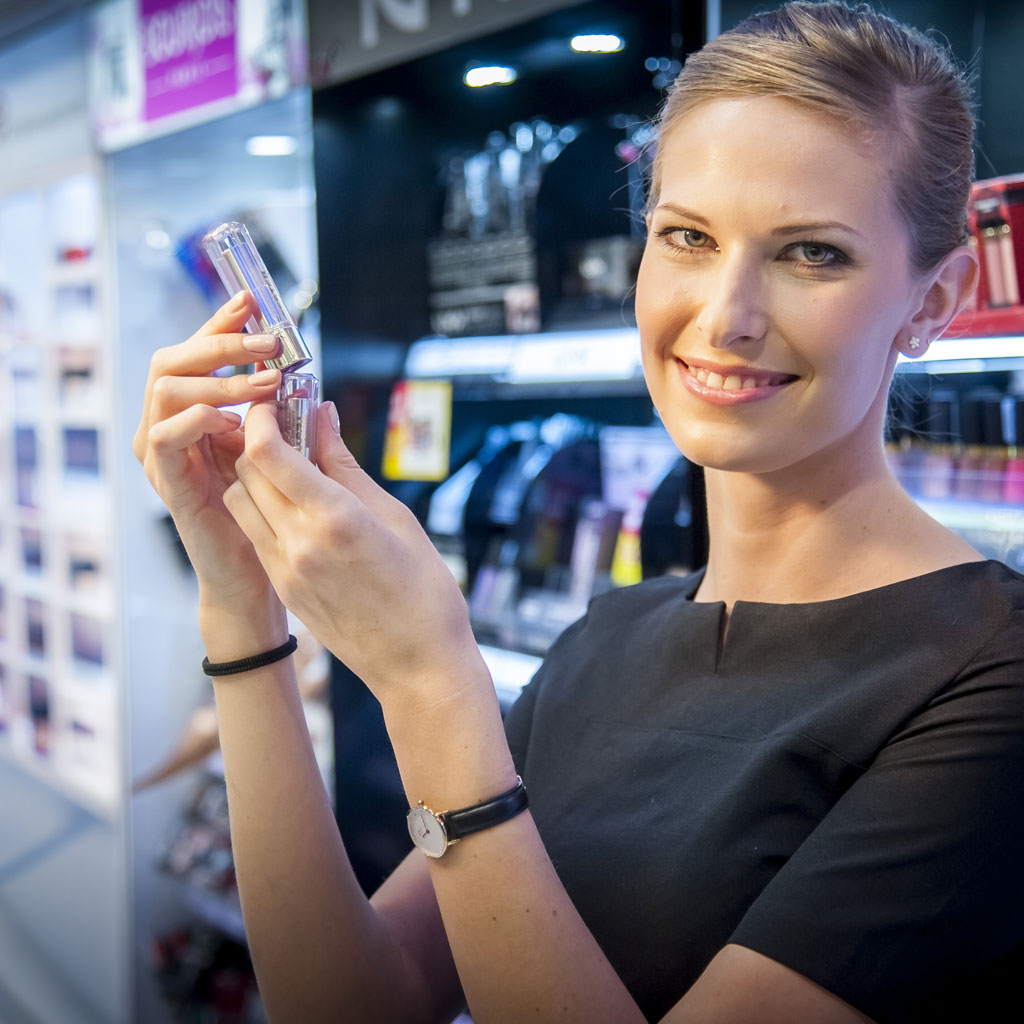
And when shoppers can make it into store, physical retail continues to play an experiential role, particularly in categories like beauty and wellness where trial, consultation, or sensory validation are important. Stores provide an environment where consumers can interact with products, compare options, and gain reassurance before committing to a purchase. Rather than competing with digital, physical retail complements it, forming part of a broader ecosystem that supports the overall decision-making process.
What emerges is not a linear path, but a series of connected moments that collectively shape the outcome. Discovery, validation, and purchase do not always happen in sequence, but they do rely on one another. Each touchpoint contributes something different, and the strength of the category lies in how well these touchpoints work together rather than in isolation.
Hybrid baskets highlight shopper behaviours
This interconnected behaviour is also reshaping how baskets are built. Across regions such as the Middle East and South Asia, Warren Brett, GM Gulf, CEO Pakistan, across the UAE, Bahrain, and Pakistan, highlights the rise of what he calls the “hybrid basket,” where shoppers combine premium and mass products within a single purchase.
As he explains, “consumers are no longer loyal to a single tier; they are choosing products based on need, occasion, and perceived value.” This signals a shift toward more flexible, context-driven decision-making within the category.
Taken together, these dynamics point to a category that is not only expanding but also becoming more complex in how it behaves.
How brands can win in beauty & wellness
For brands and retailers, this creates a more integrated operating environment. Performance is no longer defined by strength in a single channel, but by how effectively the ecosystem is connected, aligning content, digital platforms, and physical retail into a seamless experience.
Ultimately, success will depend on the ability to connect these elements into a coherent journey. When every touchpoint works together, interest becomes action, and action becomes sustained growth.


